Tesla اسٹاک کا پیش گوئی 2026: Robotaxi اور مارجنز

AI پیشین گوئی

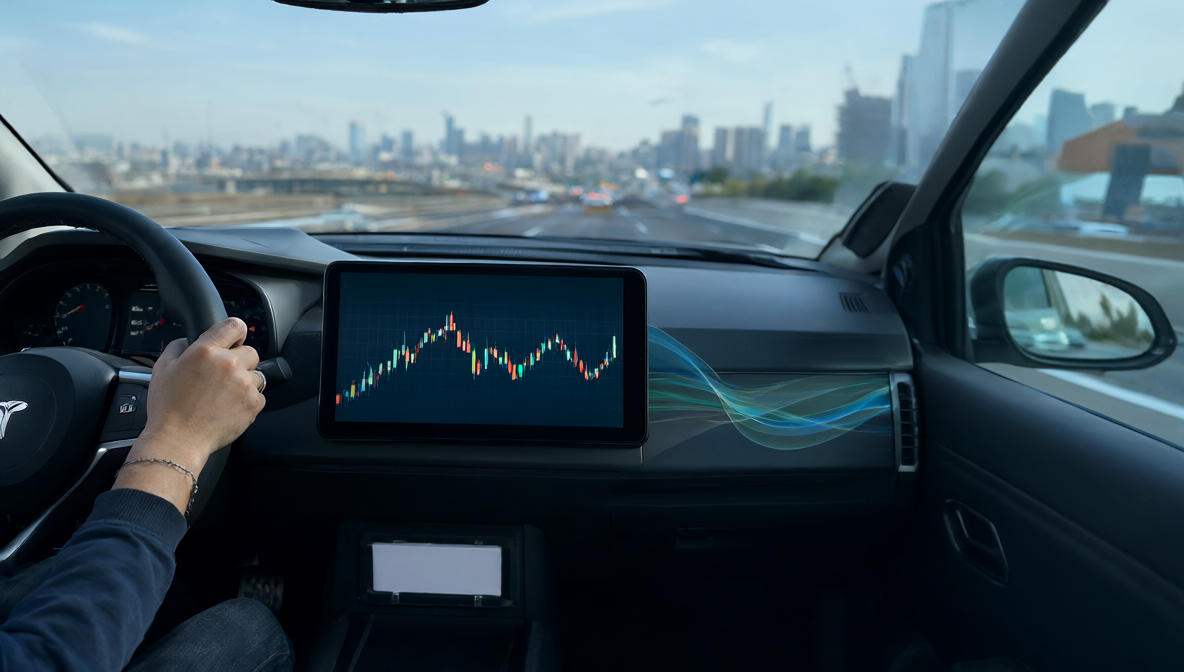
Explore the tesla stock forecast for 2026, focusing on how robotaxi deployment milestones and hardware adoption rates drive valuation alongside margin recovery.
- Robotaxi hardware adoption rates are the primary driver for the Tesla stock forecast in 2026.
- Margin recovery depends on scaling autonomous fleet operations beyond pilot phases.
- Broader market volatility, including Treasury yield surges, impacts high-growth tech valuations.
The Core Driver: Hardware Adoption Over Generic Earnings
Investors seeking a reliable tesla stock forecast 2026 must look past quarterly vehicle delivery counts and focus on hardware scalability. The valuation thesis for Tesla hinges less on selling more sedans and more on the successful deployment of its autonomous driving stack. By 2026, the critical metric is not just revenue growth, but the density of robotaxi units on public roads and their utilization rates. This shift moves Tesla from a traditional automotive manufacturer valuation to a tech-platform multiple. The correlation between hardware adoption milestones and stock price targets is direct: higher density leads to higher network effects, which supports premium valuations.
Current market conditions show stocks rallying despite economic headwinds. Recent news indicates that the Dow jumped more than 470 points on Friday, notching a winning week despite a surge in Treasury yields. This resilience suggests that investors are willing to pay premiums for growth stocks with clear catalysts. Tesla fits this profile, provided its robotaxi rollout meets specific density targets. The tesla stock price today live chart reflects this sentiment, showing sensitivity to autonomous driving news rather than just consumer demand data.
Tickers in focus
| Ticker | Company | Sector | Exchange |
|---|---|---|---|
| 1 | CK Hutchison Holdings | other | unknown |
| 101 | Hang Lung | real_estate | unknown |
| 1024 | Kuaishou Technology | telecom | unknown |
| 1038 | CK Infrastructure Holdings | utilities | unknown |
| 1044 | Hengan Group | consumer | unknown |
| 1055 | China Southern Airlines | industrials | unknown |
| 1061 | Essex Bio-Technology | health_care | unknown |
| 1066 | Shandong Weigao Group Medical Polymer | health_care | unknown |
| 1088 | China Shenhua Energy | energy | unknown |
| 1093 | CSPC Pharmaceutical | health_care | unknown |
| 1099 | Sinopharm Group | health_care | unknown |
| 1109 | China Resources Land | real_estate | unknown |
| 1113 | CK Asset Holdings | real_estate | unknown |
| 1171 | Yankuang Energy Group | energy | unknown |
| 1177 | Sino Biopharmaceutical | health_care | unknown |
| 12 | Henderson Land | real_estate | unknown |
Tools the pros use to research stocks — See recommended tools ›
Margin Recovery Through Autonomous Scaling
Margin recovery is often cited as a key factor in any tesla stock forecast, but the mechanism is changing. Traditional automotive margins are pressured by competition and price cuts. However, robotaxi operations offer a different margin profile once fixed hardware costs are amortized over high-utilization fleets. The goal for 2026 is to demonstrate that autonomous fleets can operate profitably without human supervision overheads. If Tesla achieves a fleet utilization rate exceeding 15 hours per day per vehicle, gross margins on the service layer could expand significantly.
This operational leverage is distinct from manufacturing efficiencies. While battery cost reductions help, the recurring revenue from autonomous rides provides a more stable margin base. Analysts watching the tesla stock news today should note that profitability in the service sector often commands higher multiples than hardware manufacturing. The challenge lies in the initial capital expenditure for hardware. Investors must weigh the upfront cost of deploying thousands of self-driving units against the long-term margin potential of a fully autonomous network.
Hardware Milestones and Valuation Multiples
Hardware adoption rates serve as leading indicators for valuation adjustments. Each milestone, such as expanding geofenced zones or increasing the number of active robotaxi units, provides data points for analysts. These milestones reduce uncertainty, allowing the market to assign a higher probability to successful scaling. When adoption accelerates, the discount rate applied to future cash flows decreases, boosting the present value of the stock. This dynamic explains why Tesla’s stock price often reacts sharply to minor updates in its Full Self-Driving (FSD) software rollout schedules.
Broader Market Context and Yield Sensitivity
The tesla stock forecast cannot be viewed in isolation from macroeconomic trends. Recent market activity shows that growth stocks are shrugging off surging yields, but this behavior is selective. When Treasury yields rise, high-duration assets like Tesla face valuation compression unless their growth trajectory is exceptionally clear. The recent Dow surge, driven partly by geopolitical optimism and tech strength, highlights this bifurcation. Investors are flocking to companies with dominant positions and clear paths to cash flow expansion.
Tesla’s position in the Nasdaq-100 and broader tech sector makes it sensitive to interest rate fluctuations. However, its unique combination of hardware and software allows it to decouple slightly from pure software peers. The key is maintaining a visible roadmap for autonomous adoption. If the market perceives the robotaxi rollout as stalling, the premium multiple will contract rapidly. Conversely, consistent expansion of autonomous zones supports the premium even in a higher-rate environment.
Sector Outlook: Autonomous Tech vs. Traditional Auto
Comparing Tesla to traditional automakers reveals a divergence in valuation drivers. Traditional auto stocks rely heavily on unit sales and inventory turnover. Tesla’s tesla stock forecast depends on the successful integration of AI into physical logistics. This places Tesla closer to tech-platform companies than traditional manufacturers. The sector outlook for 2026 favors companies that can demonstrate scalable AI solutions. Tesla’s ability to leverage its existing fleet for data collection and model training provides a competitive moat.
This data advantage accelerates the improvement of autonomous systems, creating a feedback loop. More data leads to better algorithms, which lead to wider adoption, which generates more data. This flywheel effect is central to the bullish case for Tesla in 2026. Investors should monitor the pace of this flywheel. Slowing data collection or algorithm improvements signal a potential ceiling for the stock price. Rapid improvements justify higher price targets.
Analyzing Platform Data Correlations
Reviewing our platform’s AI predictions for various sectors provides context for Tesla’s positioning. While our data includes diverse tickers like CK Hutchison Holdings (1) in the utilities and real estate sectors, or health-care entities like Sinopharm Group (1099), Tesla’s tech-driven growth narrative stands apart. For instance, industrial stocks like China Southern Airlines (1055) face different margin pressures than Tesla’s software-heavy model. The AI models predict stability for utilities like CK Infrastructure Holdings (1038), whereas Tesla’s forecast is inherently more volatile but potentially higher yielding.
This comparison highlights the risk-reward profile. Traditional sectors offer predictable dividends, as seen in financial stocks like Agricultural Bank of China (1288). Tesla offers capital appreciation potential tied to technological breakthroughs. The AI predictions suggest that while consumer stocks like Xtep (1368) may face steady demand, Tesla’s upside is linked to the nonlinear growth of autonomous networks. This distinction is crucial for portfolio allocation in 2026.
Investing Insights for 2026
For investors, the tesla stock forecast 2026 requires a focus on execution metrics. Watch the number of cities with active robotaxi services. Monitor the utilization rates reported in quarterly earnings. These specific data points are more indicative of future price movement than general revenue figures. The correlation between these operational metrics and stock price is strong. Delays in hardware deployment or software updates can lead to significant price corrections.
Conversely, successful scaling of the autonomous fleet supports sustained growth. The market rewards clarity and consistency. Tesla’s ability to deliver on its autonomous promises will dictate its valuation multiple. A steady increase in active robotaxi units, coupled with improved margin disclosures, will likely drive the stock higher. Investors should remain attentive to these specific catalysts rather than general market noise.
Final Assessment and Risk Factors
The path to 2026 for Tesla involves balancing hardware costs with software scalability. The tesla stock forecast remains positive if adoption milestones are met. Risks include regulatory hurdles, competition from other autonomous vehicle providers, and broader market volatility. However, the potential for margin expansion through high-utilization autonomous fleets provides a compelling upside case. The shift from selling cars to operating a transportation network is the core thesis.
Investors should treat Tesla as a tech-platform investment rather than a traditional auto stock. This perspective aligns with the current market preference for scalable AI solutions. The recent market trends, where growth stocks outperform despite yield pressures, support this view. By focusing on robotaxi adoption rates, investors can better anticipate price movements. The key is consistent execution of the autonomous roadmap.
Frequently asked questions
What drives the Tesla stock forecast for 2026?
The primary driver is the successful scaling and adoption rate of Tesla's robotaxi fleet. Investors focus on hardware deployment milestones and utilization rates rather than traditional vehicle sales metrics to determine valuation multiples.
How does robotaxi adoption affect Tesla's margins?
High utilization rates in autonomous fleets allow Tesla to amortize hardware costs more efficiently, leading to margin expansion in the service sector. This recurring revenue model differs from traditional automotive margins and supports higher valuation multiples.
Why is Tesla sensitive to Treasury yield changes?
As a high-growth tech stock, Tesla's valuation relies on future cash flows, which are discounted at higher rates when Treasury yields rise. However, clear autonomous adoption milestones can help maintain premium valuations despite rising yields.
What should investors watch in Tesla's quarterly reports?
Investors should monitor the number of active robotaxi units, geographic expansion of autonomous zones, and utilization rates per vehicle. These operational metrics provide clearer insights into future performance than general revenue figures alone.
Is Tesla considered a tech stock or an auto stock in 2026 forecasts?
Tesla is increasingly viewed as a tech-platform company due to its AI-driven autonomous driving solutions. This classification supports higher valuation multiples compared to traditional automakers, which rely more on unit sales and inventory turnover.
Please note. AI Stock Predictions content is generated by artificial-intelligence and machine-learning models for educational and informational purposes only. It is NOT financial, investment or trading advice. Forecasts can be wrong. Always do your own research and consult a licensed financial advisor before making investment decisions. Investing involves risk, including possible loss of principal.


