Best AI Stock Trading Tools for Fast Signal Execution

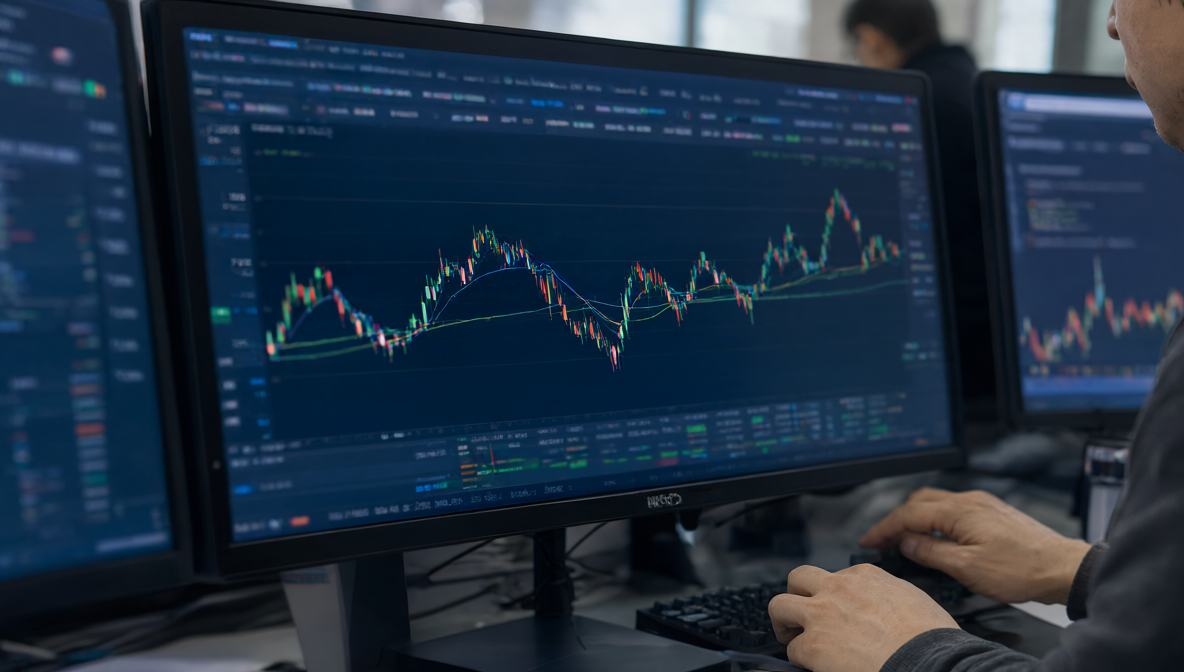
Active traders need speed and precision. Compare leading platforms for real-time signal execution and automated screening on volatile NYSE and NASDAQ tickers.
- Speed matters: Latency in signal delivery can cost active traders meaningful basis points on volatile days.
- Sector rotation is key: AI tools must adapt quickly to shifts between energy, tech, and consumer sectors.
- Verify the data: Always cross-reference AI-generated predictions with fundamental analysis before executing trades.
Speed vs. Accuracy in Modern Trading
The market environment is unforgiving for those who hesitate. When the Dow jumps more than 470 points on a Friday, or when Treasury yields surge and force a rapid rotation into defensive sectors, the difference between a good trade and a missed opportunity is often measured in milliseconds. For active traders focused on NYSE and NASDAQ listings, selecting the right software is not just about convenience; it is about maintaining edge. The search for the best ai stock trading tools is driven by this need for immediacy. You need platforms that do not just store data but process it instantly to generate actionable buy/sell alerts.
Most retail investors rely on delayed data or manual checks, which leaves them reactive rather than proactive. High-frequency trading firms have long used algorithmic speed to their advantage, but modern AI-driven platforms have democratized access to rapid signal generation. These tools analyze volume spikes, earnings surprises, and macroeconomic shifts in real time. However, not all platforms are created equal. Some excel at visual clarity, while others prioritize raw processing speed. Understanding this distinction is the first step toward optimizing your trading workflow.
Tickers in focus
| Ticker | Company | Sector | Exchange |
|---|---|---|---|
| 1 | CK Hutchison Holdings | other | unknown |
| 101 | Hang Lung | real_estate | unknown |
| 1024 | Kuaishou Technology | telecom | unknown |
| 1038 | CK Infrastructure Holdings | utilities | unknown |
| 1044 | Hengan Group | consumer | unknown |
| 1055 | China Southern Airlines | industrials | unknown |
| 1061 | Essex Bio-Technology | health_care | unknown |
| 1066 | Shandong Weigao Group Medical Polymer | health_care | unknown |
| 1088 | China Shenhua Energy | energy | unknown |
| 1093 | CSPC Pharmaceutical | health_care | unknown |
| 1099 | Sinopharm Group | health_care | unknown |
| 1109 | China Resources Land | real_estate | unknown |
| 1113 | CK Asset Holdings | real_estate | unknown |
| 1171 | Yankuang Energy Group | energy | unknown |
| 1177 | Sino Biopharmaceutical | health_care | unknown |
| 12 | Henderson Land | real_estate | unknown |
Tools the pros use to research stocks — See recommended tools ›
Evaluating Signal Latency and Execution Speed
Latency is the enemy of arbitrage and momentum strategies. If an AI tool identifies a breakout in a tech ticker but delivers the alert five seconds late, the opportunity may already be priced in. The best ai stock trading tools minimize this delay by processing data at the edge, closer to the exchange servers where possible. Look for platforms that offer direct market access (DMA) integration or low-latency API connections. This ensures that when the algorithm detects a favorable entry point, your order hits the exchange almost simultaneously with the signal generation.
Accuracy also depends on the quality of the underlying data feed. A tool might process information quickly, but if it relies on stale closing prices or delayed fundamental reports, the signals will lack precision. Effective platforms blend real-time price ticks with immediate news ingestion. For example, when headlines suggest peace hopes between the U.S. and Iran boost market sentiment, or when oil prices ease, the AI must contextualize these events instantly. The goal is to reduce cognitive load for the trader, presenting a clear directive rather than a raw data dump.
Automated Screening for Sector Rotation
Active trading often involves catching sector rotations before they become consensus. A robust automated stock screener is essential for this task. Static filters, such as "price above $50," are insufficient. Dynamic AI screening evaluates relative strength across sectors. Consider the recent performance of energy stocks like China Shenhua Energy (Ticker 1088) versus healthcare names like CSPC Pharmaceutical (Ticker 1093). These sectors often move independently based on commodity prices or regulatory news.
An effective screening tool identifies these divergences automatically. If the AI detects increased volume and positive momentum in industrial stocks like China Southern Airlines (Ticker 1055) while consumer staples lag, it should flag this rotation immediately. This allows traders to pivot capital efficiently. The best platforms allow you to set these logic parameters without writing code. You define the conditions—such as volume increase relative to the 20-day average combined with positive news sentiment—and the system handles the rest.
Handling Diverse Asset Classes
Different sectors require different screening logic. Real estate entities like Hang Lung (Ticker 101) or CK Asset Holdings (Ticker 1113) often respond differently to interest rate changes than tech firms like Hua Hong Semiconductor (Ticker 1347). A sophisticated AI tool adjusts its weighting based on the sector classification. It understands that utilities (Ticker 1038) might be less volatile but offer steady yield, while IT stocks (Ticker 1385) might offer higher beta opportunities during tech rallies. By categorizing tickers accurately, the AI provides more relevant signals for each specific asset class.
Integrating AI Predictions with Fundamental Data
Pure technical analysis is rarely enough for sustained success. The most effective trading strategies combine speed with substance. AI-generated predictions should serve as a filter, not the final decision-maker. When reviewing the platform data, you see a mix of financial institutions like Agricultural Bank of China (Ticker 1288) and consumer goods like Hengan Group (Ticker 1044). These companies have different risk profiles. The AI helps by highlighting which of these tickers is showing immediate momentum, but the trader must verify the underlying health of the business.
For instance, if the AI flags a buy signal for Sinopharm Group (Ticker 1099), check the recent earnings context. Is the move driven by broad market health care sector strength, or company-specific news? Tools that overlay fundamental metrics—such as P/E ratios or dividend yields—onto real-time charts provide this context without slowing down execution. This hybrid approach ensures that speed does not compromise quality. You get the alert quickly, but you also have enough context to decide if the signal aligns with your longer-term thesis.
Practical Workflow for Active Traders
Implementing these tools requires a disciplined workflow. Start by defining your watchlist. Instead of tracking hundreds of stocks, focus on a curated list of high-liquidity tickers. This might include large-cap financials like ICBC (Ticker 1398) or AIA Group (Ticker 1299), which offer tight spreads and reliable liquidity. Configure your automated stock screener to monitor these specific names for unusual volume activity or price breaks above key moving averages.
Next, set up your alert hierarchy. Not every signal requires immediate action. High-priority alerts should trigger on significant deviations, such as a break above a 50-day moving average accompanied by volume exceeding the average by 20%. Lower-priority alerts can handle minor consolidations. This tiered approach prevents alert fatigue. You remain responsive to meaningful moves while ignoring noise. For example, if Xtep (Ticker 1368) shows mild consumer sector strength, it might warrant a watch, but a sharp breakout in New China Life Insurance (Ticker 1336) might demand immediate capital deployment.
Managing Risk in Fast-Paced Environments
Speed can lead to errors. Ensure your platform includes robust risk management features, such as automatic stop-loss orders that trigger immediately upon entry. This protects capital during sudden reversals, which are common when Treasury yields surge and equities sell off. The AI should help identify these reversal patterns early, allowing you to exit positions before losses accumulate. Discipline in execution is just as important as the speed of the signal itself.
Choosing the Right Platform for Your Style
When comparing the best ai stock trading tools, consider your trading style. Scalpers need the lowest possible latency and minimal interface clutter. Swing traders might prioritize deeper fundamental integration and historical pattern recognition. Most modern platforms offer customizable dashboards to suit these preferences. Look for providers that offer transparent data sourcing and clear explanations of their algorithmic logic. Black-box algorithms are less reliable than those with interpretable outputs.
It is also wise to test the platform during high-volatility periods. A tool that performs well on a quiet Tuesday may struggle during a Friday sell-off when volume spikes and spreads widen. Evaluate how the system handles rapid data influx. Does it freeze, or does it continue to deliver coherent signals? Reliability under pressure is a key differentiator among top ai investing platforms.
Finally, remember that AI predictions are generated based on historical patterns and current data inputs. They are not guaranteed outcomes. Market conditions change rapidly, and unforeseen events can override historical trends. Use these tools as powerful assistants that enhance your decision-making process, not as infallible oracles. By combining fast signal execution with rigorous fundamental checks, you create a resilient trading strategy capable of adapting to any market environment.
Frequently asked questions
What is the difference between an automated stock screener and an AI trading bot?
An automated stock screener filters stocks based on criteria like volume or price movement to identify candidates. An AI trading bot executes trades automatically based on signals generated by algorithms. Screeners help you find opportunities; bots help you execute them quickly.
How do AI tools handle sudden market news affecting NYSE stocks?
Leading AI tools ingest news feeds and social sentiment in real time. They correlate this information with price action to generate immediate alerts. For example, if oil prices ease, the AI might flag energy stocks for review before the broader market fully adjusts.
Are AI-generated stock predictions reliable for short-term trading?
AI predictions are useful for identifying momentum and statistical probabilities in the short term. However, they do not account for all human factors or black swan events. They are best used as one component of a broader analysis strategy, not the sole basis for investment decisions.
Which sectors benefit most from AI-driven trading signals?
High-volume sectors like technology and financials often benefit most because their liquidity allows AI signals to be executed with minimal slippage. However, defensive sectors like utilities can also provide stable signals during volatile market periods, offering a hedge against tech volatility.
Please note. AI Stock Predictions content is generated by artificial-intelligence and machine-learning models for educational and informational purposes only. It is NOT financial, investment or trading advice. Forecasts can be wrong. Always do your own research and consult a licensed financial advisor before making investment decisions. Investing involves risk, including possible loss of principal.