Tesla Stock Forecast 2026: EV Share & Robotaxi Drivers

AI forecast

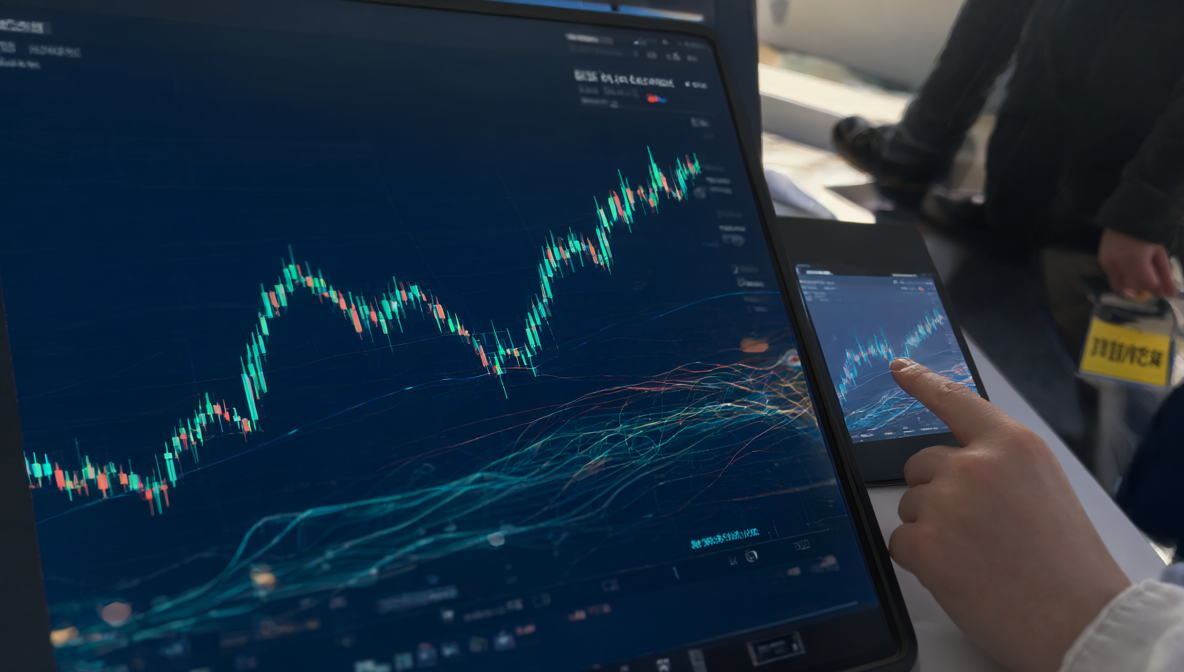
As Tesla shifts from hardware sales to software-driven margins, investors must weigh EV competition against high-margin autonomous fleet revenue in their 2026 thesis.
- Tesla’s valuation increasingly hinges on software margins rather than vehicle unit sales.
- Robotaxi commercialization offers a high-margin revenue stream that could decouple TSLA from traditional auto cyclicality.
- Increased competition in the EV hardware sector compresses gross margins, making software adoption critical for long-term growth.
The Shift from Hardware to Software Valuation
The traditional metric for evaluating automotive companies—units sold per quarter—is losing relevance for Tesla. As we look toward a robust Tesla stock forecast for 2026, the primary driver of shareholder value appears to be shifting from vehicle volume to the profitability of its software and autonomous driving stack. While competitors in China and Europe fight for market share on hardware specs and price points, Tesla’s strategic advantage lies in its ability to monetize data and fleet operations.
Investors focusing solely on delivery numbers may miss the broader narrative. The company’s valuation premium is justified only if the transition to a high-margin software platform succeeds. This involves scaling the Full Self-Driving (FSD) subscription model and deploying the Robotaxi network at scale. The 2026 horizon represents the critical period where these initiatives must move from pilot phases to consistent cash-flow generators.
Tickers in focus
| Ticker | Company | Sector | Exchange |
|---|---|---|---|
| 1 | CK Hutchison Holdings | other | unknown |
| 101 | Hang Lung | real_estate | unknown |
| 1024 | Kuaishou Technology | telecom | unknown |
| 1038 | CK Infrastructure Holdings | utilities | unknown |
| 1044 | Hengan Group | consumer | unknown |
| 1055 | China Southern Airlines | industrials | unknown |
| 1061 | Essex Bio-Technology | health_care | unknown |
| 1066 | Shandong Weigao Group Medical Polymer | health_care | unknown |
| 1088 | China Shenhua Energy | energy | unknown |
| 1093 | CSPC Pharmaceutical | health_care | unknown |
| 1099 | Sinopharm Group | health_care | unknown |
| 1109 | China Resources Land | real_estate | unknown |
| 1113 | CK Asset Holdings | real_estate | unknown |
| 1171 | Yankuang Energy Group | energy | unknown |
| 1177 | Sino Biopharmaceutical | health_care | unknown |
| 12 | Henderson Land | real_estate | unknown |
Tools the pros use to research stocks — See recommended tools ›
Analyzing EV Market Share Dynamics
The electric vehicle sector is no longer a blue-ocean opportunity. By 2026, the global EV market will likely be characterized by intense price competition and commoditization. Traditional automakers have accelerated their electrification timelines, and Chinese manufacturers have established dominant cost structures. In this environment, Tesla’s market share in hardware may face slight compression, but its brand equity remains resilient.
The key metric to watch is not just total deliveries, but the mix of vehicles sold. Higher adoption of the Cybertruck and refreshed Model 3/Y in emerging markets can stabilize revenue lines. However, hardware margins are naturally thinner. The strategic imperative is to use the vehicle fleet as a hardware platform for software deployment. If Tesla maintains a dominant share in the premium EV segment while capturing significant data from its installed base, the hardware competition becomes secondary to network effects.
Robotaxi Revenue: The High-Margin Engine
The Robotaxi initiative is the central pillar of the bullish case for Tesla’s long-term growth. Unlike traditional auto manufacturing, where margins are capped by component costs and labor, autonomous fleet operations offer scalable, high-margin revenue potential. By 2026, the goal is a fully operational autonomous ride-hailing network in major metropolitan areas.
This segment changes the earnings profile significantly. Software-driven services typically command gross margins of 70% or higher, compared to the 15-25% range typical of automotive hardware. If Tesla can achieve a critical mass of autonomous miles driven, the incremental revenue from each additional ride is almost entirely pure profit. This economic model allows for aggressive pricing to capture market share from Uber and Lyft while maintaining superior profitability.
The challenge lies in execution speed. Regulatory approvals and technical reliability must meet commercial standards within the next 18 months. Any delay in scaling the Robotaxi network compresses the valuation multiple, forcing the stock to be judged more like a traditional automaker. Success, however, justifies a premium multiple akin to tech platforms rather than manufacturing firms.
Broader Market Context and Sector Rotation
Current market conditions suggest a rotation toward quality and consistent earnings growth. Recent market movements indicate that investors are rewarding companies with clear competitive moats and predictable cash flows. The Dow and Nasdaq have shown resilience despite fluctuating Treasury yields, suggesting a preference for stocks with strong fundamental backing.
In this environment, Tesla’s ability to demonstrate consistent earnings growth through software adoption is crucial. Volatility in interest rates affects high-growth stocks, but Tesla’s unique position as both a manufacturer and a tech platform provides a hedge. When interest rates rise, traditional automakers often suffer from financing costs. Tesla’s strong balance sheet and cash flow from software services can mitigate these pressures, offering stability amid broader market swings.
Comparative Analysis: Tech vs. Traditional Auto
To understand the potential upside, it helps to look at how different sectors are valued. Traditional auto stocks often trade at low multiples due to cyclical earnings. Tech stocks command higher multiples due to scalability. Tesla sits at the intersection. The following observations from broader market analysis help contextualize Tesla’s position:
- Real Estate and Utilities Stability: Companies like Hang Lung (Ticker 101) and CK Infrastructure Holdings (Ticker 1038) offer stable dividends and predictable returns. These sectors are often defensive plays. Tesla is not a defensive play; it is a growth play. Investors seeking safety in real estate or utilities are unlikely to drive TSLA’s volatility, meaning the stock must compete on growth metrics alone.
- Healthcare and Consumer Resilience: Healthcare firms like Sinopharm Group (Ticker 1099) and consumer staples like Hengan Group (Ticker 1044) show steady demand regardless of economic cycles. Tesla’s software revenue aims to mimic this consistency. By locking in FSD subscriptions, Tesla creates a recurring revenue model similar to these defensive sectors, but with higher growth potential.
- Technology Sector Momentum: IT and semiconductor companies such as Hua Hong Semiconductor (Ticker 1347) and Shanghai Fudan Microelectronics (Ticker 1385) benefit from AI and hardware demand. Tesla’s AI chip development and FSD software align with this tech-centric valuation framework. As the AI sector continues to show strength, Tesla’s integration of AI into its fleet management positions it favorably against pure hardware manufacturers.
This comparative framework suggests that Tesla’s stock performance in 2026 will correlate more closely with tech sector multiples than traditional automotive peers, provided software revenue scales effectively.
Risks to the 2026 Forecast
No forecast is without risk. The primary threat to the Tesla stock forecast for 2026 is execution failure in the autonomous driving space. If the Robotaxi network fails to achieve regulatory approval or widespread consumer adoption, the high-margin thesis collapses. In that scenario, Tesla reverts to being a high-growth EV manufacturer, competing directly with BYD and Toyota on hardware specs and pricing.
Another risk is interest rate persistence. If Treasury yields remain elevated, the discount rate applied to future cash flows increases, potentially compressing valuation multiples. Tesla must demonstrate that its earnings growth outpaces these discount rate pressures. Additionally, supply chain disruptions or battery cost fluctuations could impact gross margins, requiring careful management of the hardware-software blend.
Investors should monitor quarterly FSD adoption rates and Robotaxi pilot expansions closely. These metrics provide early signals of whether the software-driven revenue model is gaining traction. Consistent growth in these areas supports the premium valuation, while stagnation suggests a return to traditional auto valuation metrics.
Frequently asked questions
What is the primary driver for Tesla stock growth in 2026?
The primary driver is the transition from hardware sales to high-margin software and autonomous driving services, particularly through the expansion of the Robotaxi network and Full Self-Driving subscriptions.
How does increased EV competition affect Tesla's valuation?
Increased competition compresses hardware margins, making Tesla’s software ecosystem critical. The valuation depends on maintaining premium brand equity while leveraging software revenue to offset thinner hardware profits.
Is Tesla a good investment for 2026 compared to traditional automakers?
Tesla offers higher growth potential through its tech-focused business model, but with greater volatility. Traditional automakers offer stability and dividends, while Tesla relies on successful scaling of autonomous tech for superior returns.
What role do AI predictions play in analyzing Tesla stock?
AI-generated predictions help identify trends in adoption rates and revenue mix, but they are not guaranteed. Investors should use these insights alongside fundamental analysis of earnings reports and sector trends.
Please note. AI Stock Predictions content is generated by artificial-intelligence and machine-learning models for educational and informational purposes only. It is NOT financial, investment or trading advice. Forecasts can be wrong. Always do your own research and consult a licensed financial advisor before making investment decisions. Investing involves risk, including possible loss of principal.


