Best AI Stock Trading Tools for Automated Screening 2026

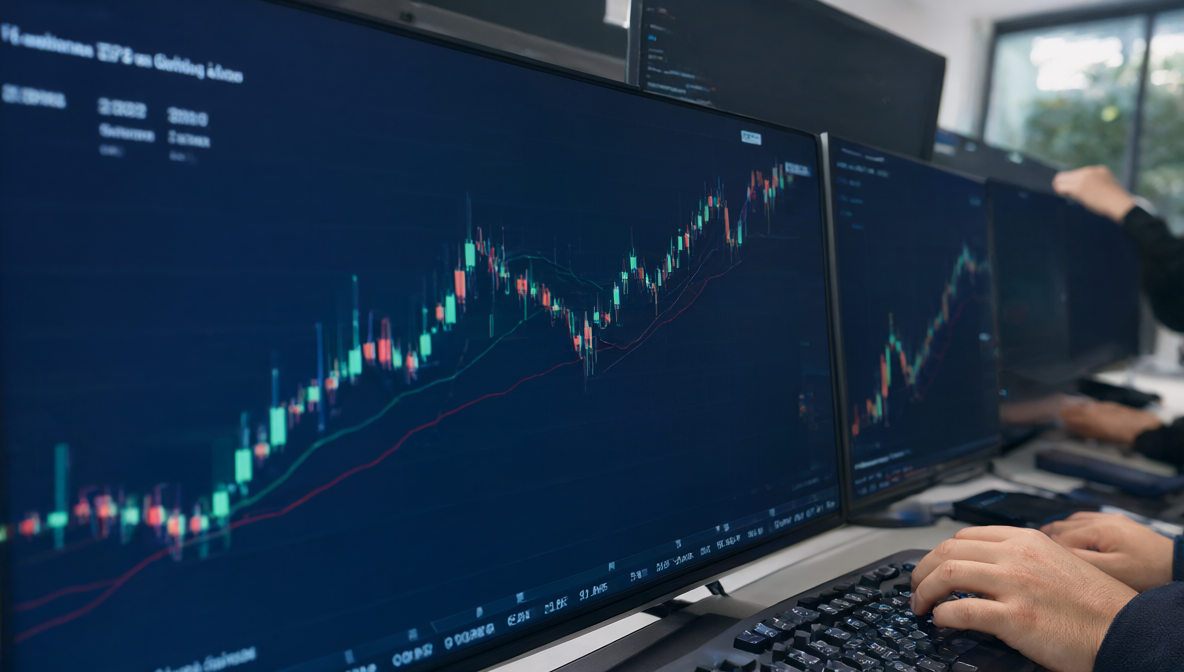
Retail investors are shifting toward algorithmic efficiency. This guide evaluates the best ai stock trading tools for rapid portfolio screening and cost management.
- Speed of signal processing is the primary differentiator among top platforms.
- Cost efficiency varies significantly between subscription models and volume-based tiers.
- Integration with existing brokerage APIs reduces friction for active traders.
Why Automated Screening Matters Now
Market volatility in late 2026 has forced retail investors to prioritize speed over traditional fundamental analysis. The Dow Jones Industrial Average recently jumped more than 470 points in a single session, driven by geopolitical shifts and treasury yield movements. Human analysts struggle to process these rapid changes across thousands of tickers in real time. This is where the best ai stock trading tools provide tangible value, filtering noise to highlight actionable signals.
These platforms do not just chart prices; they correlate macro-economic shifts with sector-specific performance. For instance, when treasury yields surge, automated screeners instantly identify defensive sectors like utilities and healthcare. The goal is not to replace human judgment but to accelerate the initial filtering process, allowing investors to focus on execution rather than data gathering.
Tickers in focus
| Ticker | Company | Sector | Exchange |
|---|---|---|---|
| 1 | CK Hutchison Holdings | other | unknown |
| 101 | Hang Lung | real_estate | unknown |
| 1024 | Kuaishou Technology | telecom | unknown |
| 1038 | CK Infrastructure Holdings | utilities | unknown |
| 1044 | Hengan Group | consumer | unknown |
| 1055 | China Southern Airlines | industrials | unknown |
| 1061 | Essex Bio-Technology | health_care | unknown |
| 1066 | Shandong Weigao Group Medical Polymer | health_care | unknown |
| 1088 | China Shenhua Energy | energy | unknown |
| 1093 | CSPC Pharmaceutical | health_care | unknown |
| 1099 | Sinopharm Group | health_care | unknown |
| 1109 | China Resources Land | real_estate | unknown |
| 1113 | CK Asset Holdings | real_estate | unknown |
| 1171 | Yankuang Energy Group | energy | unknown |
| 1177 | Sino Biopharmaceutical | health_care | unknown |
| 12 | Henderson Land | real_estate | unknown |
Tools the pros use to research stocks — See recommended tools ›
Evaluating Signal Speed and Latency
The core metric for any screening tool is latency. In a market where small-cap stocks can drop sharply during midday sell-offs, a delay of seconds can erase profit margins. Leading platforms now process data through edge computing nodes, reducing the time between market movement and signal generation. This immediacy is critical for strategies that rely on momentum or mean-reversion within intraday timeframes.
Consider the recent performance of semiconductor stocks. While Nvidia faced a slight slip, Micron rose concurrently. An effective AI screener identifies this divergence instantly, suggesting a rotation from high-valuation leaders to value-oriented peers. Human monitoring might miss this nuance until the next closing bell. Automated tools catch it in milliseconds, offering a clearer picture of sector rotation.
Cost Efficiency and Subscription Models
Retail investors often overlook the total cost of ownership when selecting software. Many platforms advertise low monthly fees but charge heavily for data depth or API calls. A thorough AI trading bots review reveals that transparent pricing structures are rare. The most cost-effective solutions offer tiered subscriptions where higher tiers unlock faster data feeds without penalizing basic users.
Some platforms bundle analysis with execution capabilities, reducing the need for separate brokerage interfaces. This integration lowers overall friction. However, investors must calculate whether the premium for real-time data justifies the potential alpha. For long-term holders, daily summaries may suffice, making cheaper tiers highly attractive. Active traders, conversely, benefit from paying for millisecond-level updates.
Integration Capabilities for Retail Traders
Seamless integration with existing brokerage accounts is a key feature of the best ai stock trading tools. Standalone analytics platforms often require manual trade entry, introducing execution risk. Modern tools connect directly via APIs to major brokers, allowing automated order placement based on screening criteria. This reduces emotional bias during volatile sessions, such as when the Nasdaq hits record highs amid broader market uncertainty.
Compatibility with mobile devices is equally important. Investors who manage portfolios on the go need responsive interfaces that deliver alerts without draining battery life or requiring constant connectivity. Platforms that optimize for low-bandwidth environments ensure that critical signals are received even in poor network conditions. This reliability is often overlooked in feature lists but is vital for consistent performance.
Case Study: Screening Asian Market Opportunities
To illustrate how these tools function in practice, consider the diverse landscape of Asian equities. Recent AI predictions on our platform highlight specific opportunities across various sectors, demonstrating how automated screening identifies value in complex markets.
In the healthcare sector, platforms flagged companies like Essex Bio-Technology (Ticker: 1061) and Shandong Weigao Group Medical Polymer (Ticker: 1066). Both showed positive signals driven by domestic consumption trends and policy support. The screening algorithm correlated these movements with broader healthcare indices, confirming a sector-wide uptrend rather than isolated stock behavior.
Simultaneously, the real estate sector presented mixed signals. Hang Lung Properties (Ticker: 101) and China Resources Land (Ticker: 1109) were analyzed for yield stability against inflation risks. The tools highlighted their defensive characteristics, suggesting them as suitable holdings during periods of treasury yield volatility. This contrasts with more cyclical names like Xtep (Ticker: 1368) in the consumer sector, where volatility was higher.
Energy stocks also underwent rigorous screening. China Shenhua Energy (Ticker: 1088) and Yankuang Energy Group (Ticker: 1171) were evaluated for dividend consistency and commodity price sensitivity. The AI models weighed these factors against oil price easing, a trend noted in recent market headlines. By comparing these metrics, investors could identify which energy holdings offered better risk-adjusted returns without manually reading dozens of earnings reports.
Financial institutions like ICBC (Ticker: 1398) and Henderson Land (Ticker: 12) provided stable baselines. The screening tools emphasized their liquidity and dividend yields, making them ideal for conservative portfolios. This layered analysis—combining sector trends with individual stock metrics—shows how automated screeners outperform manual checklists in breadth and speed.
Final Considerations for Investors
Choosing the right platform depends on your trading frequency and capital allocation. High-frequency traders need low-latency connections and deep liquidity data. Long-term investors benefit more from comprehensive fundamental analysis and dividend tracking features. There is no single solution that fits all strategies perfectly.
It is crucial to remember that these predictions are AI-generated and not guaranteed. Algorithms excel at pattern recognition but may miss qualitative nuances like management changes or regulatory shifts. Use automated tools as a filter, not a definitive oracle. Combine quantitative signals with your own research to build a robust investment strategy.
The market environment in 2026 rewards adaptability. As small caps and gold miners experienced recent sell-offs, agile investors used automated tools to rebalance quickly. Those relying on static checklists missed these windows. The best ai stock trading tools empower you to react with precision, turning market noise into structured opportunity.
Frequently asked questions
What are the best ai stock trading tools for beginners?
Beginners should look for platforms with intuitive dashboards and clear signal explanations. Tools that offer free tiers with basic screening capabilities allow users to learn without high upfront costs. Ensure the platform supports your preferred brokerage for seamless execution.
How do automated stock screeners improve portfolio performance?
Automated screeners process vast amounts of data faster than humans, identifying trends and anomalies in real time. This reduces emotional bias and ensures that investment decisions are based on current market conditions rather than outdated information. Speed and consistency are the primary benefits.
Are AI trading bots reliable for long-term investing?
AI bots are highly effective for tactical adjustments and sector rotation. For long-term holding, they help identify fundamentally strong companies with consistent dividends. However, human oversight is still necessary to account for qualitative factors that algorithms might miss.
What is the typical cost of AI investing platforms?
Costs range from free ad-supported models to premium subscriptions exceeding $100 monthly. Premium tiers usually offer faster data feeds and deeper historical analysis. Evaluate whether the additional speed justifies the cost for your specific trading strategy.
Can AI tools handle volatile markets like the recent Dow swings?
Yes, AI tools excel in volatile markets by processing large volumes of data quickly. During recent Dow fluctuations, algorithms identified defensive sectors and momentum leaders faster than manual analysis. This helps investors rebalance portfolios efficiently during rapid market changes.
Please note. AI Stock Predictions content is generated by artificial-intelligence and machine-learning models for educational and informational purposes only. It is NOT financial, investment or trading advice. Forecasts can be wrong. Always do your own research and consult a licensed financial advisor before making investment decisions. Investing involves risk, including possible loss of principal.


