Best Brokers for Day Trading in 2026: Speed & AI Tools
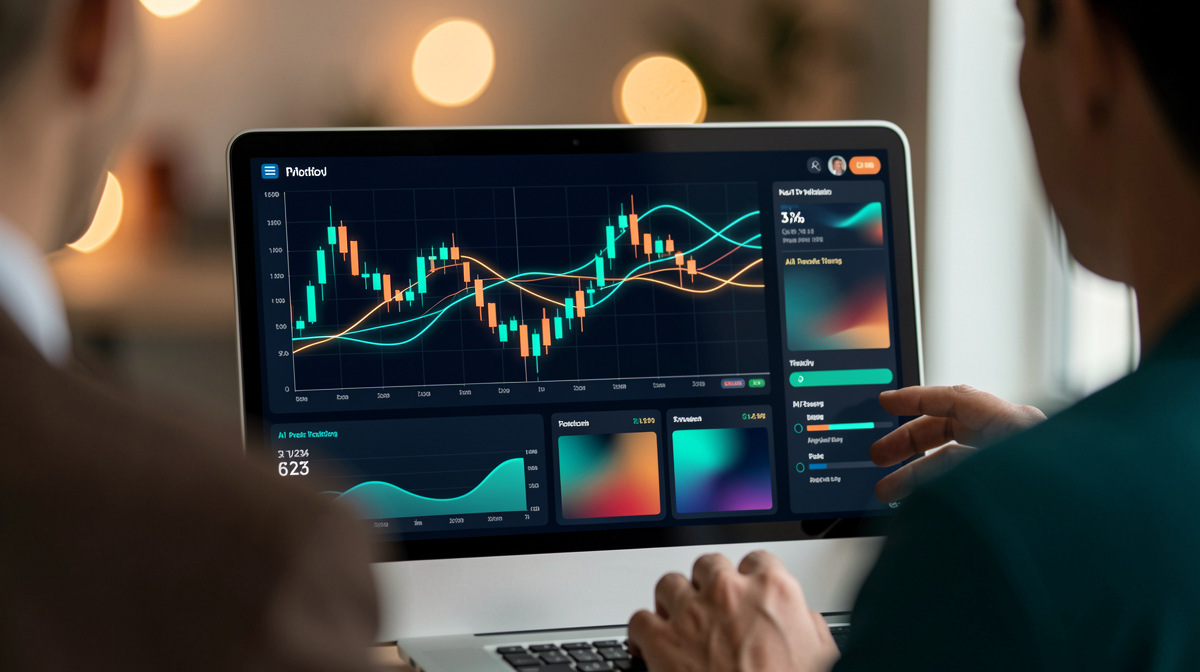
Active traders need more than just low commissions; they need execution speed and intelligent data processing. This guide breaks down the top platforms for 2026, focusing on how AI integration and fee structures impact real-time profitability.
- Execution speed matters more than commission rates for high-frequency strategies.
- AI-driven prediction tools now offer superior edge over traditional manual analysis.
- Look for platforms that integrate real-time data with predictive modeling seamlessly.
Defining Performance in Modern Trading
The search for the best brokers for day trading 2026 has shifted from simple commission comparisons to holistic ecosystem evaluations. Active traders no longer just look for the lowest fee; they look for the fastest fill and the smartest data. In a market environment characterized by volatile bond yields and shifting sector leadership, milliseconds matter. A broker that delays execution by even a fraction of a second can erode the edge provided by a sophisticated entry strategy. Therefore, the primary metric for selection is now latency combined with analytical depth.
Modern platforms must bridge the gap between raw price action and predictive intelligence. Traders are increasingly relying on AI trading tools review metrics to determine which platforms provide actionable insights rather than just historical charts. The goal is to find a low fee trading platform that does not compromise on data fidelity. If the data feed is delayed, the prediction model, no matter how advanced, becomes obsolete before the trade executes. Speed is the foundation upon which all other features rest.
Tickers in focus
| Ticker | Company | Sector | Exchange |
|---|---|---|---|
| 1 | CK Hutchison Holdings | other | unknown |
| 101 | Hang Lung | real_estate | unknown |
| 1024 | Kuaishou Technology | telecom | unknown |
| 1038 | CK Infrastructure Holdings | utilities | unknown |
| 1044 | Hengan Group | consumer | unknown |
| 1055 | China Southern Airlines | industrials | unknown |
| 1061 | Essex Bio-Technology | health_care | unknown |
| 1066 | Shandong Weigao Group Medical Polymer | health_care | unknown |
| 1088 | China Shenhua Energy | energy | unknown |
| 1093 | CSPC Pharmaceutical | health_care | unknown |
| 1099 | Sinopharm Group | health_care | unknown |
| 1109 | China Resources Land | real_estate | unknown |
| 1113 | CK Asset Holdings | real_estate | unknown |
| 1171 | Yankuang Energy Group | energy | unknown |
| 1177 | Sino Biopharmaceutical | health_care | unknown |
| 12 | Henderson Land | real_estate | unknown |
Tools the pros use to research stocks — See recommended tools ›
The Role of AI in Execution Strategy
Artificial intelligence has moved from a novelty feature to a core component of trading infrastructure. Leading brokers are integrating proprietary AI engines that analyze order flow, volume profile, and sentiment in real time. These systems help traders identify high-probability setups faster than manual scanning allows. When evaluating platforms, look for those that offer AI Stock Predictions directly within the charting interface. This integration reduces the friction of switching between apps and allows for quicker decision-making during fast-moving sessions.
Consider how these tools handle specific sectors. For instance, analyzing energy and industrial stocks requires processing large volumes of earnings data and macro-economic indicators. Tickers like China Shenhua Energy (1088) and Hua Hong Semiconductor (1347) often exhibit volatility tied to global supply chain news. An effective AI tool contextualizes these moves instantly, flagging potential breakouts or reversals. This level of automation allows the trader to focus on execution rather than data gathering.
Analyzing Platform Data and Sector Performance
To understand how these tools function in practice, examine the coverage of major indices and individual stocks. The current market landscape shows a divergence between traditional value stocks and tech-driven growth. Platforms that successfully integrate AI predictions often highlight these shifts early. For example, recent analysis on Henderson Land (12) and CK Asset Holdings (1113) suggests a stabilization in the real estate sector, while healthcare names like Sinopharm Group (1099) show varied momentum based on clinical trial news.
The ability to filter these stocks quickly is crucial. The best stock screeners for day traders now use machine learning to rank stocks by volatility and volume relative to their sector peers. This allows traders to isolate leaders like AIA Group (1299) or lagging names in the financial sector. By leveraging these AI-driven filters, traders can build watchlists that reflect current market breadth rather than static historical averages. This dynamic approach ensures that capital is allocated to stocks with immediate liquidity and directional bias.
Integrating Macro Trends with Micro Signals
Brokers that excel in 2026 connect macro-economic headlines with micro-stock behavior. Recent news indicates that rising Treasury yields and oil prices above $100 are influencing sector rotation. A superior platform will tag stocks like China Southern Airlines (1055) or Shandong Weigao Group Medical Polymer (1066) as sensitive to these macro factors. This context helps traders anticipate gaps at the open. Instead of reacting to price changes, traders anticipate them based on correlated asset movements.
This predictive capability is what separates premium platforms from basic discount brokers. The software doesn't just show price; it explains why price is moving. When the Dow Jones futures slip as bond yields rise, the AI system highlights which sectors are most vulnerable. This immediate synthesis of information allows for faster, more confident trade entries. The integration of news sentiment analysis directly into the trading interface is a key differentiator for serious active traders.
Fee Structures and Cost Efficiency
While speed and intelligence are critical, cost efficiency remains a vital consideration. The best brokers for day trading 2026 offer transparent fee structures without hidden costs for data feeds or API access. Many platforms charge for premium real-time data, which can add up for active traders. Look for brokers that bundle these costs into a competitive commission structure or offer them free with reasonable trading volume. A low fee trading platform should not penalize you for accessing the high-quality data needed for effective AI analysis.
Consider the break-even point for your trading style. High-frequency traders benefit from per-share commissions, while swing traders may prefer flat-rate fees. The ideal platform allows you to customize this based on your average trade size. Additionally, check if the broker offers rebates for providing liquidity. These rebates can significantly offset costs for market-making strategies. Evaluating the total cost of ownership, including data fees and software subscriptions, ensures that your net returns remain healthy over the long term.
Choosing the Right Tech Stack
Selecting the right broker is about choosing the right tech stack for your workflow. Some traders prefer web-based platforms for accessibility, while others require desktop software with multi-monitor support. The best stock screeners for day traders are now cloud-based, allowing synchronization across devices. This flexibility is essential for traders who move between office, home, and mobile environments. Ensure the platform supports your preferred charting library and order types without lag.
Compatibility with third-party AI tools is another factor. Some brokers allow API connections to external analysis engines, while others keep everything within their proprietary ecosystem. Closed ecosystems often provide a smoother experience with less setup time. Open ecosystems allow for greater customization but may require technical maintenance. Test the platform's demo mode to ensure the interface responds quickly to clicks and keystrokes. Lag in the UI itself can disrupt trading rhythm just as much as delayed execution.
Future-Proofing Your Trading Setup
As we move deeper into the decade, the integration of artificial intelligence in trading platforms will become standard rather than exceptional. Traders should choose brokers that are actively updating their algorithms and expanding their data sources. Look for firms that regularly release updates to their prediction models and reporting tools. Stagnant platforms will fall behind as competitors leverage newer machine learning architectures to provide sharper insights.
The market environment is dynamic, with sectors like healthcare and technology showing distinct leadership cycles. Tickers such as CSPC Pharmaceutical (1093) and Essex Bio-Technology (1061) require agile analysis tools to track news-driven moves. A broker that fails to update its screening criteria for these sectors will hinder your ability to capture alpha. Prioritize platforms that demonstrate a commitment to technological improvement and responsive customer support. Your broker is your partner in execution; ensure they are equipped to handle the pace of modern markets.
Note: Predictions and analysis provided by AI tools are generated based on historical data and current trends. Past performance is not indicative of future results, and all trading involves risk.
Frequently asked questions
What is the most important feature for day trading brokers in 2026?
Execution speed is paramount, followed closely by the integration of reliable AI prediction tools. Delays in order filling can significantly impact profitability for active strategies, so low latency is critical.
How do AI trading tools improve day trading performance?
AI tools process vast amounts of data faster than humans, identifying patterns and correlations in real time. This helps traders spot opportunities in sectors like tech or healthcare before manual analysis catches up.
Are low fee trading platforms always the best choice?
Not necessarily. While low fees help net returns, platforms with poor execution speed or limited data feeds can cost more in slippage and missed opportunities. Balance cost with performance metrics.
Can I rely on AI stock predictions for guaranteed profits?
No, AI predictions are probabilistic models based on historical and current data. They provide valuable insights but do not guarantee outcomes. Always use risk management techniques alongside these tools.
Which sectors benefit most from AI-driven stock screeners?
High-volatility sectors like technology, healthcare, and energy benefit significantly. AI can quickly analyze news sentiment and volume spikes in stocks like Hua Hong Semiconductor or China Shenhua Energy, offering timely entry signals.
Please note. AI Stock Predictions content is generated by artificial-intelligence and machine-learning models for educational and informational purposes only. It is NOT financial, investment or trading advice. Forecasts can be wrong. Always do your own research and consult a licensed financial advisor before making investment decisions. Investing involves risk, including possible loss of principal.