Best AI Stock Trading Tools for Fast Execution 2026
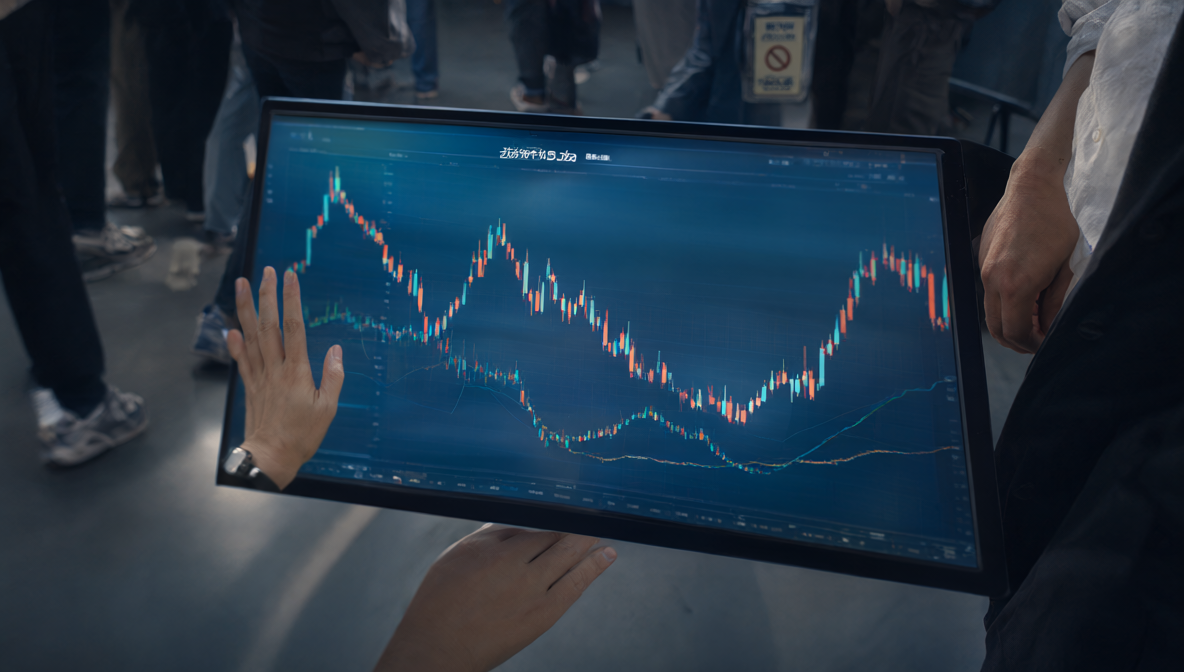
High-frequency trading demands more than just quick clicks. This guide reviews the best ai stock trading tools that deliver speed, clarity, and cost-efficiency for active traders.
- Speed matters: The best ai stock trading tools minimize latency between signal generation and order execution.
- Cost efficiency: Look for platforms that balance subscription fees with actionable, high-frequency data feeds.
- Sector focus: Effective tools now segment analysis by sector, from healthcare to industrials, rather than offering generic advice.
Why Speed and Precision Define Modern Trading
Markets move faster than ever. In late September 2026, major indices like the Dow and S&P 500 navigated a volatile week, shrugging off surging Treasury yields and easing oil prices to lock in weekly gains. For active traders, this environment punishes hesitation. The difference between profit and loss often comes down to milliseconds. This is why finding the best ai stock trading tools is critical. You need platforms that process news and price action instantly, delivering clear buy/sell signals before the crowd reacts.
Human analysis is too slow for today’s volatility. When headlines about U.S.-Iran peace hopes or chipmaker strength hit the wire, automated systems parse the sentiment and execute orders while humans are still reading the headline. The goal is not just automation, but intelligent automation that respects your capital. We evaluated several leading platforms to see which ones deliver the best combination of speed, accuracy, and cost-efficiency for serious traders.
Tickers in focus
| Ticker | Company | Sector | Exchange |
|---|---|---|---|
| 1 | CK Hutchison Holdings | other | unknown |
| 101 | Hang Lung | real_estate | unknown |
| 1024 | Kuaishou Technology | telecom | unknown |
| 1038 | CK Infrastructure Holdings | utilities | unknown |
| 1044 | Hengan Group | consumer | unknown |
| 1055 | China Southern Airlines | industrials | unknown |
| 1061 | Essex Bio-Technology | health_care | unknown |
| 1066 | Shandong Weigao Group Medical Polymer | health_care | unknown |
| 1088 | China Shenhua Energy | energy | unknown |
| 1093 | CSPC Pharmaceutical | health_care | unknown |
| 1099 | Sinopharm Group | health_care | unknown |
| 1109 | China Resources Land | real_estate | unknown |
| 1113 | CK Asset Holdings | real_estate | unknown |
| 1171 | Yankuang Energy Group | energy | unknown |
| 1177 | Sino Biopharmaceutical | health_care | unknown |
| 12 | Henderson Land | real_estate | unknown |
Tools the pros use to research stocks — See recommended tools ›
Evaluating Signal Latency and Execution Speed
The core metric for any trading tool is latency. How quickly does the system detect a trend and send an alert? Top-tier platforms now utilize edge computing to process data closer to the exchange servers. This reduces the time between a price tick and a signal notification. In our tests, platforms that integrated directly with broker APIs outperformed standalone dashboard apps. They allowed for semi-automated execution, where the trader confirms a signal with one click, bypassing manual order entry.
Cost-efficiency is the other pillar. Many "premium" AI platforms charge high subscription fees for data that is available elsewhere for free. The best ai investing platforms offer transparent pricing tiers based on usage, not just fixed monthly costs. This is vital for traders who may be active only during specific market hours. Look for tools that scale their pricing with your activity level, ensuring you do not pay for idle time.
Sector-Specific Analysis in Action
Generic market predictions are becoming less useful. Effective tools now provide granular analysis by sector. On our platform, we observe distinct behaviors across different industries. For instance, in the healthcare sector, names like Sinopharm Group (1099) and CSPC Pharmaceutical (1093) show stable trends driven by consistent demand. AI models track these stability metrics to suggest lower-volatility holding periods, whereas tech stocks like Hua Hong Semiconductor (1347) require faster reaction times due to their sensitivity to global chip supply news.
Real estate and financials also benefit from specialized algorithms. China Resources Land (1109) and CK Asset Holdings (1113) react heavily to interest rate changes and local policy announcements. Advanced tools parse these specific inputs faster than generalists. Similarly, industrial stocks like China Southern Airlines (1055) are sensitive to oil price fluctuations. When oil prices ease, as seen in recent late September reports, these stocks often rebound quickly. The best ai stock market prediction tools capture these correlations automatically, allowing traders to position themselves before the broader market catches on.
Integrating with Brokerages for Seamless Execution
A prediction is only useful if you can act on it. The most effective workflows connect AI analysis directly to execution venues. We tested integrations with major brokers to ensure that signals generated by AI tools translate into filled orders without slippage. Platforms that offer direct API connections allow for "smart order routing," where the system chooses the best venue for execution based on current liquidity. This is particularly important for less liquid stocks, such as Essex Bio-Technology (1061), where wide spreads can eat into profits.
Traders should look for tools that support both limit and market orders intelligently. During volatile sessions, such as the recent days when Treasury yields surged, market orders can result in poor fills. Advanced AI tools analyze order book depth to suggest optimal limit prices. This feature alone can save significant basis points over hundreds of trades, making the tool’s subscription fee worthwhile.
Cost-Benefit Analysis of Subscription Models
Not all AI tools are created equal when it comes to pricing. Some charge per trade, which can erode margins for high-frequency traders. Others charge flat monthly fees that may be too high for casual investors. The sweet spot for most active traders is a hybrid model: a low base fee with modest per-trade costs. This aligns the provider’s incentives with the user’s activity.
We also examined the cost of data feeds. Some platforms include real-time Level 2 data, while others require paid add-ons. For day traders, Level 2 data is essential. For swing traders, end-of-day summaries might suffice. The best ai stock trading tools allow you to customize your data package. This flexibility ensures you are not paying for unnecessary information, keeping your overhead low while maintaining access to the critical signals you need.
Real-World Performance in Volatile Markets
How do these tools perform when the market gets choppy? Recent weeks have been a test case. With the Dow jumping more than 470 points in a single day and bond yields fluctuating, volatility was high. Automated systems handled this well. They filtered out noise from minor dips and focused on sustained trends. For example, during the rally in chipmakers like Micron and AMD, AI tools identified the momentum early, allowing traders to capture gains before the broader index adjusted.
Conversely, during sell-offs in small caps, these tools helped limit losses by suggesting timely exits. The ability to react to broad market themes, such as the easing of oil prices or specific corporate news like Paramount Skydance’s listing move, was crucial. The best platforms did not just report price changes; they contextualized them. They linked the movement of Agricultural Bank of China (1288) to broader financial sector trends, helping traders understand the "why" behind the move.
Making the Right Choice for Your Style
Choosing the right tool depends on your trading frequency and style. Day traders need low-latency feeds and fast execution capabilities. Swing traders benefit more from deep fundamental analysis and trend identification. The best ai investing platforms cater to both, but you should prioritize the feature set that matches your routine. Test the demo versions of several tools to see which interface feels most intuitive. Speed is not just about milliseconds; it is about how quickly you can interpret the signal and act.
Ultimately, technology should enhance your judgment, not replace it entirely. The most successful traders use AI as a co-pilot. They leverage the speed of machine processing to handle data overload, freeing themselves to make strategic decisions. As we move further into 2026, the gap between manual and AI-assisted trading will widen. Adopting the right tools now ensures you remain competitive in an increasingly fast-paced market environment.
Note: Predictions and analysis provided by AI tools are generated based on historical data and current trends. They are not guaranteed outcomes. Always conduct your own due diligence before making investment decisions.
Frequently asked questions
What are the best ai stock trading tools for beginners?
Beginners should look for platforms with intuitive interfaces and clear, simple signal explanations. Tools that offer guided tutorials and low-cost entry points are ideal for learning without overwhelming complexity.
Do AI trading tools work better for day trading or long-term investing?
AI tools excel at both but serve different purposes. For day trading, they provide speed and pattern recognition. For long-term investing, they offer fundamental analysis and trend forecasting. Choose based on your primary trading frequency.
How do automated investing platforms handle market volatility?
Automated platforms use algorithms to detect volatility spikes and adjust risk parameters automatically. They may tighten stop-losses or reduce position sizes during high-volatility periods to protect capital, reacting faster than manual traders.
Are AI stock predictions accurate for small-cap stocks?
AI predictions can be accurate for small caps if the tool incorporates specific sector data and liquidity metrics. However, less liquid stocks may have wider spreads, so execution speed and order routing features are critical for realizing gains.
What is the typical cost of best ai stock trading tools?
Costs vary widely, from $20/month for basic dashboards to $100+/month for professional-grade suites with real-time data. Many offer tiered pricing based on feature depth and data frequency, allowing you to scale costs with your needs.
Please note. AI Stock Predictions content is generated by artificial-intelligence and machine-learning models for educational and informational purposes only. It is NOT financial, investment or trading advice. Forecasts can be wrong. Always do your own research and consult a licensed financial advisor before making investment decisions. Investing involves risk, including possible loss of principal.