Tesla Stock Forecast 2026: Robotaxi Impact on Price Targets
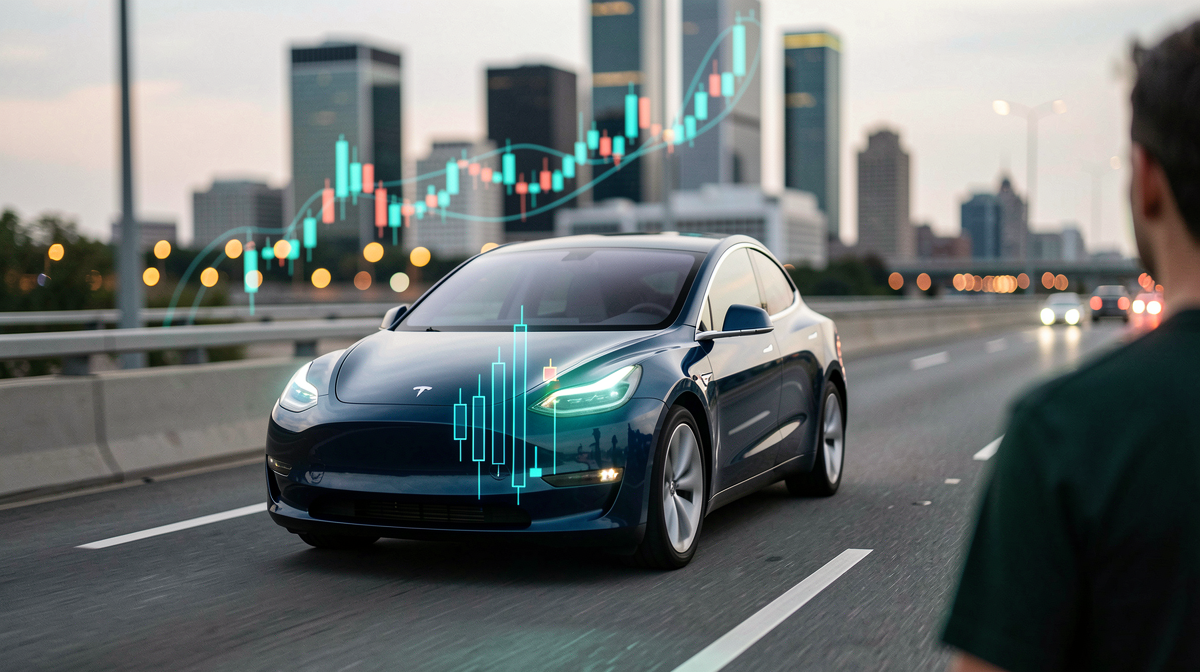
Explore how the Robotaxi rollout serves as the primary catalyst for Tesla's valuation in 2026, influencing price targets and creating distinct buy signals amidst broader market volatility.
- The Robotaxi rollout acts as the primary valuation driver for Tesla in 2026, shifting focus from hardware margins to software scalability.
- Current market volatility, marked by rising oil prices and bond yields, creates specific entry points for long-term TSLA holders.
- Investors should monitor EV sector rotation trends to distinguish between temporary dips and structural valuation resets.
The Robotaxi Catalyst in the Tesla Stock Forecast 2026
The narrative surrounding Tesla has shifted from pure electric vehicle manufacturing to a hybrid model of hardware and autonomous software services. For the Tesla stock forecast 2026, the critical variable is not just delivery numbers, but the successful scaling of the Robotaxi fleet. This operational milestone determines whether TSLA trades as a car manufacturer or a high-margin tech platform. As we look toward the next two years, the convergence of fleet autonomy and energy storage solutions creates a unique valuation case that differs significantly from traditional automotive peers.
Investors are increasingly looking past quarterly delivery misses to assess the long-term utility of Tesla’s full self-driving (FSD) software. The 2026 horizon suggests a transition period where the market prices in the potential revenue streams from autonomous ride-hailing services. This shift requires a careful analysis of how capital expenditures on infrastructure balance against recurring software revenue. The stock’s trajectory will likely hinge on the execution speed of this rollout and its ability to capture market share from traditional ride-hailing competitors.
Tickers in focus
| Ticker | Company | Sector | Exchange |
|---|---|---|---|
| 1 | CK Hutchison Holdings | other | unknown |
| 101 | Hang Lung | real_estate | unknown |
| 1024 | Kuaishou Technology | telecom | unknown |
| 1038 | CK Infrastructure Holdings | utilities | unknown |
| 1044 | Hengan Group | consumer | unknown |
| 1055 | China Southern Airlines | industrials | unknown |
| 1061 | Essex Bio-Technology | health_care | unknown |
| 1066 | Shandong Weigao Group Medical Polymer | health_care | unknown |
| 1088 | China Shenhua Energy | energy | unknown |
| 1093 | CSPC Pharmaceutical | health_care | unknown |
| 1099 | Sinopharm Group | health_care | unknown |
| 1109 | China Resources Land | real_estate | unknown |
| 1113 | CK Asset Holdings | real_estate | unknown |
| 1171 | Yankuang Energy Group | energy | unknown |
| 1177 | Sino Biopharmaceutical | health_care | unknown |
| 12 | Henderson Land | real_estate | unknown |
Tools the pros use to research stocks — See recommended tools ›
Market Context: Oil Prices and Bond Yields
Broader macroeconomic conditions heavily influence tech-heavy indices, impacting Tesla alongside other growth stocks. Recent market movements show the Dow and Nasdaq facing pressure as Treasury yields jump and oil prices surge above $100 per barrel. These factors create a challenging environment for high-growth equities, where higher discount rates compress future earnings multiples. Despite this, Tesla’s dual role as a clean energy provider offers a hedge against rising fossil fuel costs, potentially stabilizing its relative performance during inflationary periods.
The correlation between oil prices and EV adoption rates remains a key metric for analysts. When oil costs rise, the total cost of ownership advantage for electric vehicles improves, potentially accelerating demand for Tesla’s hardware. However, this benefit is often offset by the increased cost of capital for expanding manufacturing facilities. Navigating this balance requires monitoring both consumer sentiment regarding fuel costs and institutional appetite for long-duration assets in a high-yield environment.
Sector Rotation and Consumer Sentiment
Within the broader market, capital is rotating between defensive sectors and growth-oriented tech stocks. Tesla occupies a unique space, influenced by both consumer discretionary spending and technology innovation cycles. As the Nasdaq faces volatility due to inflation reports, Tesla’s stock often mirrors these trends while maintaining its own idiosyncratic drivers related to autonomous driving progress. Understanding these rotation patterns helps in timing entry points during broader market corrections.
Analyzing Platform Data: Regional Performance Indicators
While Tesla is a global entity, regional economic health impacts its supply chain and consumer demand. Our platform data highlights diverse performance across Asian markets, which are crucial for Tesla’s manufacturing and sales. For instance, CK Hutchison Holdings (Ticker: 1) operates across telecommunications, retail, and infrastructure, providing a broad indicator of consumer spending power and logistical efficiency in key Asian hubs. Strong performance in these underlying sectors often precedes improved demand for premium consumer electronics and vehicles, including those from Tesla.
Similarly, Hang Lung Properties (Ticker: 101) offers insights into commercial real estate vitality in Hong Kong and mainland China. A robust real estate sector supports the infrastructure needed for EV charging networks and autonomous fleet operations. Conversely, volatility in China Southern Airlines (Ticker: 1055) reflects fluctuating energy costs and travel demand, which directly correlates with the economic health of Tesla’s largest international market. By observing these proxy indicators, investors can gauge the broader economic backdrop against which Tesla’s specific catalysts will play out. The stability of CK Infrastructure Holdings (Ticker: 1038) further underscores the importance of reliable utility grids, a foundational element for scaling electric vehicle adoption and autonomous charging logistics.
Buy Signals and Valuation Metrics
Determining buy signals for Tesla requires looking beyond traditional P/E ratios to assess software attach rates and fleet utilization. A compelling buy signal emerges when the stock trades at levels that discount the potential recurring revenue from autonomous services. Investors should watch for consolidation phases where the stock stabilizes after earnings reports, providing opportunities to accumulate shares before major software updates or fleet expansions. The divergence between hardware sales growth and software margin expansion is the key metric to watch for conviction levels.
Volatility in the Nasdaq, driven by bond yield fluctuations, often creates temporary dips in Tesla’s price. These dips can serve as strategic entry points if the fundamental thesis regarding autonomous driving adoption remains intact. Analyzing the relationship between Tesla’s price action and broader tech sector trends helps distinguish between noise and meaningful valuation adjustments. Long-term holders should focus on the company’s ability to maintain leadership in both battery technology and AI-driven software.
Key Metrics for 2026 Conviction
- Software Attach Rates: Monitor the percentage of new vehicle sales adopting full self-driving subscriptions.
- Charging Network Utilization: Track revenue growth from the Supercharger network as it opens to non-Tesla vehicles.
- Autonomous Fleet Milestones: Assess the pace of Robotaxi deployment in key metropolitan areas.
Sector Outlook: EV Competition and Tech Convergence
The EV sector is undergoing rapid consolidation, with legacy automakers struggling to match Tesla’s integrated software-hardware approach. This competitive moat is critical for sustaining premium valuations in 2026. However, new entrants in China and Europe are closing the gap on battery efficiency and cost. Tesla’s response to these challenges, particularly in terms of manufacturing scale and supply chain resilience, will dictate its market share trajectory. The ability to leverage vertical integration remains a primary defense against margin compression.
Technological convergence is also reshaping the sector. Tesla’s AI capabilities are increasingly relevant not just for cars, but for humanoid robotics and energy management systems. This broader technological footprint allows Tesla to diversify its revenue streams, reducing reliance on automotive sales cycles. Investors should consider this multi-sector exposure when evaluating long-term growth potential, as it provides multiple avenues for value creation beyond traditional car sales.
Final Thoughts on Investing in TSLA
The Tesla stock forecast for 2026 depends heavily on the execution of its autonomous vision. While macroeconomic headwinds like rising oil prices and interest rates pose short-term challenges, the underlying structural advantages of Tesla’s technology platform remain strong. Investors should adopt a disciplined approach, using market volatility to build positions while monitoring specific operational milestones related to the Robotaxi rollout. The interplay between hardware sales and software scalability will define the stock’s performance in the coming year.
Note: Predictions provided by AI Stock Predictions are generated by algorithms and are not guaranteed. Always conduct your own research and consider your financial situation before making investment decisions.
Frequently asked questions
What is the main catalyst for Tesla stock in 2026?
The primary catalyst is the successful scaling of the Robotaxi autonomous fleet, which shifts the valuation model from hardware sales to high-margin software and service revenues.
How do rising oil prices affect Tesla stock?
Rising oil prices can boost EV demand by improving the cost-of-ownership advantage, but they also increase input costs and may lead to higher interest rates, which can pressure tech valuations.
Are there specific buy signals for TSLA in volatile markets?
Yes, investors often look for consolidation periods after earnings or during broader Nasdaq corrections as entry points, provided the fundamental thesis on autonomous driving adoption remains intact.
Does Tesla compete only with other car manufacturers?
No, Tesla competes with traditional automakers on hardware but also with tech giants in AI, robotics, and energy management, making its valuation dependent on multiple sector trends.
Please note. AI Stock Predictions content is generated by artificial-intelligence and machine-learning models for educational and informational purposes only. It is NOT financial, investment or trading advice. Forecasts can be wrong. Always do your own research and consult a licensed financial advisor before making investment decisions. Investing involves risk, including possible loss of principal.


